A Sense of Self from the Inside Out
An interview by Emily Kennel
Chatting with Andrew Salgado on his Work, the Art Market, and his Upcoming Ottawa Engagement
Despite cyclical and unpredictable economic troubles, there are few things that make better investments than art. Last May in the midst of a crippling recession Edvard Munch’s painting The Scream sold for a record $120 million at auction. This painting, which is one of four very similar versions, broke records by reaching the highest price ever paid for a work of art. The Norwegian painter, Munch died in 1944 and is renowned for his depictions of psychological struggle, which in turn went on to inspire much of 20th century expressionism. While Munch has already been established as an influential artist of the 18th century, the interest in contemporary art and emerging artists is just as coveted as works of the old masters. Industry analysts are continuously baffled by the contemporary art market, which never fails to surprise and shock; which art receives the highest bids is often difficult to predict. One artist that has continuously impressed collectors and captivated the art world is Andrew Salgado. Originally from Regina, Salgado has been living and working out of London since 2008. His domination on the scene, and the changing face of contemporary art, is best encapsulated by the commission he received to paint six new works to be displayed in the front windows of London retailer Harvey Nichols. Within one hour all paintings had sold.
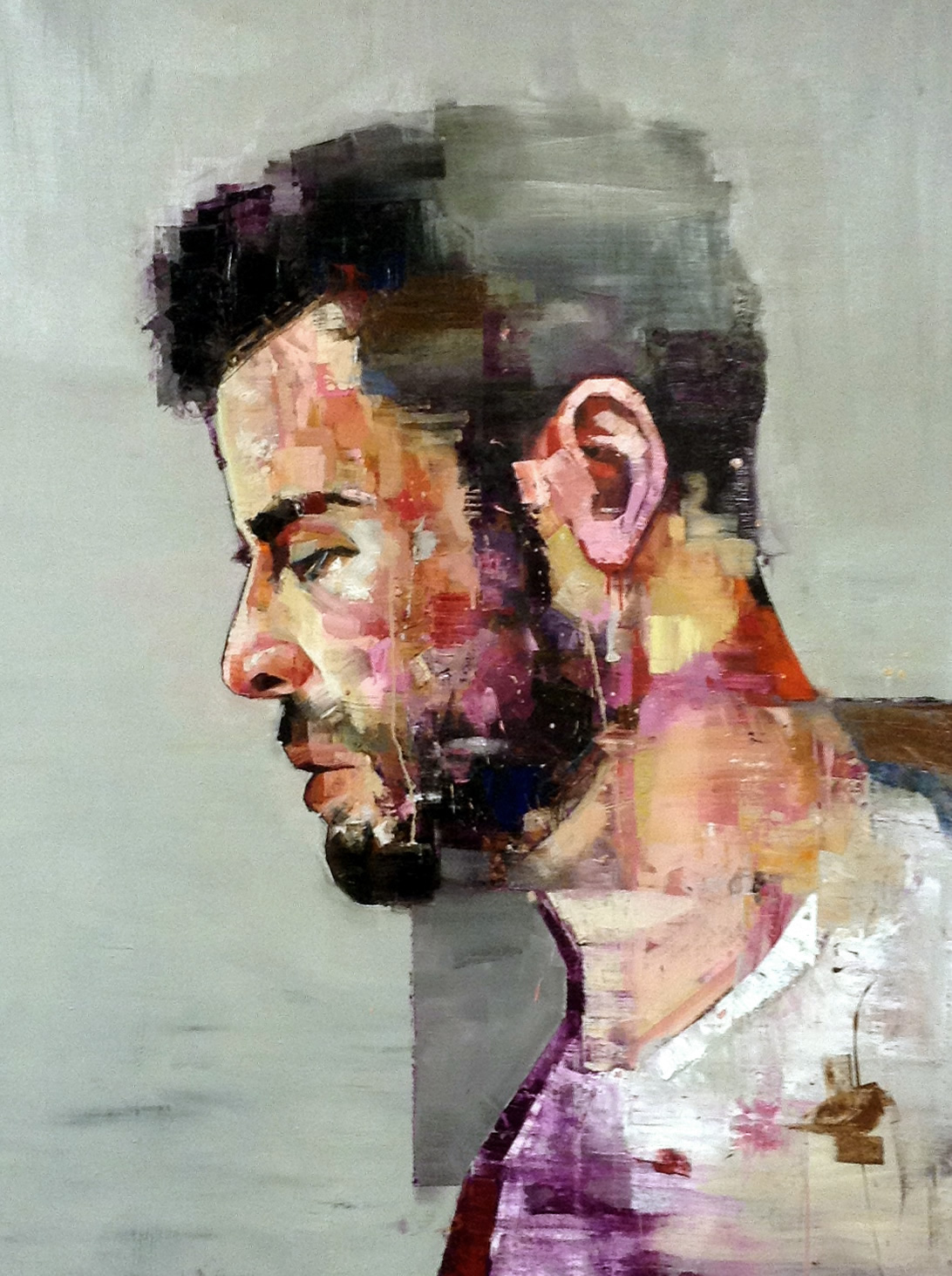
Salgado’s success is no mystery; he is a phenomenal artist. Producing mainly figurative works, he tackles the notion of identity in its many facets. Whether political, social, or something you can’t quite grasp, Salgado demonstrates how the politics of the body can convey much more than physical appearance. His painterly treatment of the figures reminds me of Jenny Saville’s own examination of flesh and its social connotations; an exploration of the body as an occupier of both public and private space and what this means in turn for a consideration of self. Where Saville explores the female body, Salgado focuses on the type of beauty found in the masculine. Opening this week in Ottawa’s La Petite Mort Gallery is Andrew Salgado’s most recent show The Smallest Heart’s Desire, which will feature eleven new works that explore a narrative sense of self; as our own best critic are we the hero or villain to our own story? I was thrilled to communicate with Andrew earlier this month and pick his brain on the contemporary art market, his own take on his ongoing success, and what we can expect from his upcoming show.
Originally from Regina and an alumnus of the University of British Columbia, you have been living and working out of London, England since 2008. How do you feel the art scene in London is comparable to that of the Canadian West Coast? Is there a large discrepancy between the two art environments?
Well, to be totally frank, I don’t see much crossover. I find that any art scene changes quite dramatically depending on the city. After my degree I lived for a year in Berlin – an amazing and alternative experience – with an art-scene quite different from what is happening in London, but even London is going through a cultural revolution at present, so I’m lucky to be geographically situated between areas like Berlin or London that are porous cultural sites. London in particular has a thriving art scene with openings, events, and great shows popping up regularly. It’s a spellbinding, fascinating, non-stop city – so I feel that I am still (and constantly) learning; but learning as a practicing artist is an entirely different world than learning as an art student.
As a student, I felt confident upon leaving Vancouver and coming to London to do my Master’s Degree, but London juggled my senses: not long after commencing my Masters, I would find myself comparing an artist’s craft to an egg, and though I assume there are schools that help students polish that egg, Chelsea College took my egg and smashed it on the ground. Of course the option is to walk away from the mess, or begin the lengthy process of picking up the pieces. While this seems anecdotal in retrospect, at the time it was a lengthy and often-frustrating process of trying to redefine who I was as an artist, and to establish my artistic voice.
I guess I see Vancouver as always being very photo-based, with a conceptually focused art scene. There wasn’t much breathing room for an emerging figurative painter such as myself and I think that there are a lot of painters from Vancouver, friends and peers of mine, with similar inklings feeling somewhat frustrated by the lack of a particular sort of opportunities in that city. It’s a shame, because I love Vancouver, but I think the scene there is a lot safer than one that you’ll find in a city like London, for instance. Even academically: there is a lot more ‘control’ in the North American arts-academic world. In the North American system there is much more guidance – for better or worse. You are guided and mentored and in the UK this doesn’t happen. I was taken aback upon first arriving in London at the sheer lack of direction we were given as Masters students. In fact, I very nearly dropped out of my Masters program 3-months in – I was so disillusioned by it all. I had a very negative experience at graduate school and I was immensely unhappy with a number of things both personally and professionally. After a certain period of time, however, I learned how to see what I first perceived as faults in the UK scholastic system as its fortes. I’m still not sure if that was just making lemonade out of lemons, or if it was a real revelation….either way, I’m totally contented on having stayed in the program: its lead me to where I am today. After graduation, however, the true wonders of the London art scene began to reveal themselves, and I’m here to stay…at least for now.
Your work is quite literally selling off the shelves, as demonstrated most recently by your sold-out commissioned work for Harvey Nichols. In an age of recession, this feat has puzzled many analysts of the contemporary art market and proves once again that it’s always smart to invest in art. Why do you feel your work is so universally appealing and thereby commercially successful?
I have no idea! [Laughs] I don’t know if I would think my work is so universally appealing, I think all artists appeal to a respective niche market, and I’m fortunate to have had a strong and growing response in the past few years. Certainly, I know it appeals to different people for various reasons, sometimes people respond to the subject matter, others the colors, but others it’s the conceptual or political aspect that I’m ticking away at. It’s a thrilling feeling to know that my work is selling as it does, but this is accompanied with a certain anxiety and uncertainty; I used to think that as soon as my work began selling as it does now, that all my problems as a young artist would be answered, I’d have ‘had it made’ so to speak. However, what I realize is that even with the modest successes I’ve received, it opens an entire new avenue of pressures. Every move I make, I now accompany by my own set of critical and crucial standards and continuous re-examination. It is important to me to take risks, and move away from comfort-zones, and try new things, but one opens himself up to ostracizing old collectors if trying something too radically new. I suppose with each new articulation of my work, I might lose a certain audience, but I gain a new audience, so above all I find that of tantamount importance is the maintenance of my own vision…which I realize might sound like something of a cliché, but the only way to stay sane is to remain honest to my own process as an artist. A lot of clients want me to paint the same thing I was painting two, three years ago, but that’s not who I am anymore. I want to try new things even within the parameters that I have set for myself, I’m trying to take wild liberties and new strides both technically and conceptually.
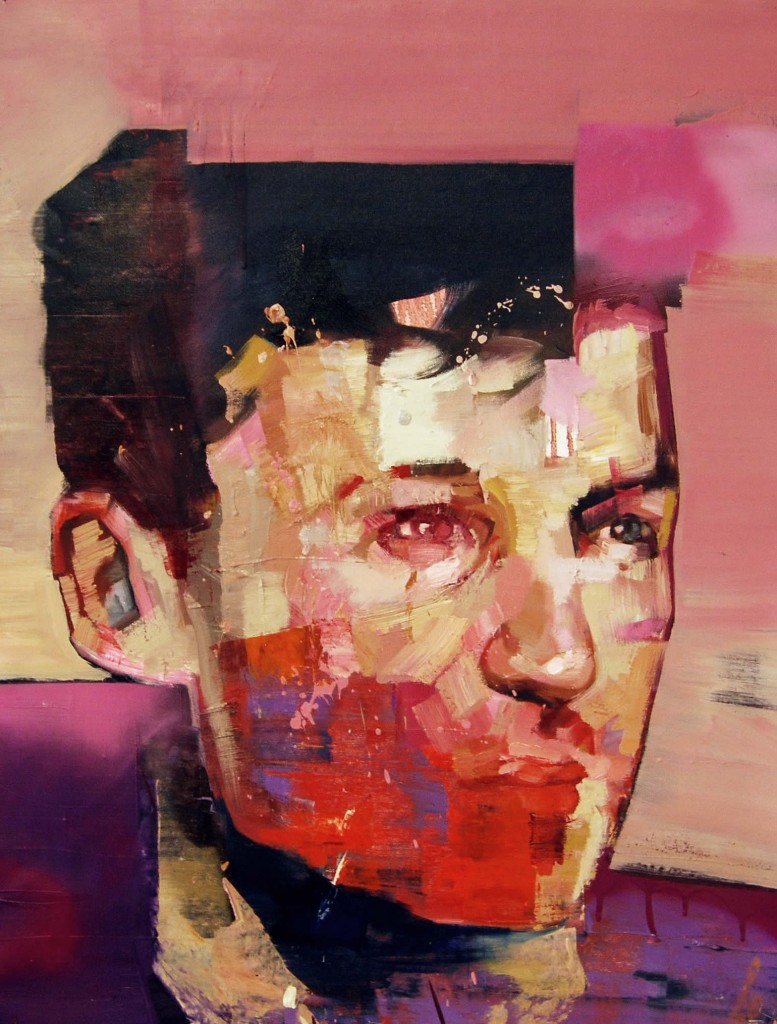
In your artist statement you describe your figurative paintings as more than mere representation of the superficial but rather a conscious reflection on the notion of identity and the multi-faceted exploration of ‘Self’. How do you feel that social politics can be explored and indeed developed through figurative art?
This is something that is very important to me; for whatever reason, I have chosen the figurative to explore my concerns. I consider myself a type of activist through my work; I always have something to say, a determined perspective, and in that sense the artwork becomes political. It became politicized in 2008 when I was a victim of a hate-crime, which refocused the target and message within my work and elevated it from something decorative into what it is and does to this day. While it’s become less autobiographical over the years, I still speak to concepts that are crucially related to my own sense of self, and a greater ideological concept of identity. I think this is another reason why people seem to respond to it…they see the power of emotion and thought that I approach the works with. I think all art is an avenue toward social politics. I am captivated by the idea of what I call ‘the thinking artist’ – that being the artist that is so sensitively aware of the concepts he or she is dealing with, or subverting, or challenging through their art-practice. I think a lot of artists tend to be quite self-indulgent and forget that there is a real world with serious, grave concerns operating outside of their studios. As artists, we lead a life of privilege and this can verge on indignancy – but we have a social responsibility because the eyes of change are turned to us to set by example: there’s something self-righteous about saying ‘this is what I do, and I think it’s important, and you should too’ so its brilliant to see artists that transcend this solipsism and actually discuss real world problems, or even if they are dealing autobiographically, as I tend to, to at least exhibit the cognizance that there exists a society with real ills and issues, and maybe – just maybe – use their talents to battle these concepts instead of a misguided sense of self-importance. Obviously, I feel very strongly about this concept. I think art should challenge barriers, assist the marginalized, and on an obvious level – inspire and inform.
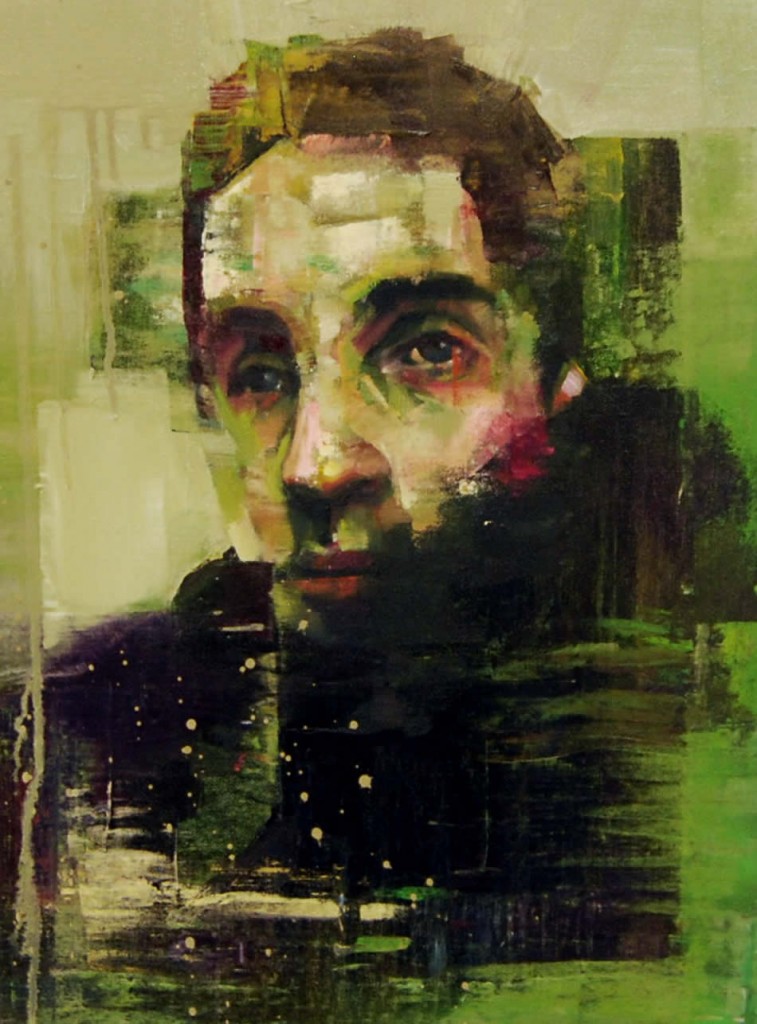
Considerations of the masculine have recently been overlooked in the pursuit of a feminist scholarship. Ideas of male beauty and attention to the male form perpetuated early art historical reflections but have been recently cast aside as lingering faults of a patriarchal system. Even the idea of ‘beauty’ in the masculine disrupts the trope of the tough, warrior male aesthetic. How do you see your work rejuvenating this look at male beauty and why do you feel it is a necessary theme in your artistic narrative?
Interesting. This is a great, informed question. Actually I’ve contributed a chapter to a forthcoming theoretical book published by the Art Institute of Chicago Press, the entry is entitled “The Sexualized Masculine Body” and it deals precisely with this contentious issue in theoretical study. More specifically, my contribution focuses on the masculine body as either ‘hetero and therefore empowered, or ‘homo’ and therefore a source of deviance and repression. I think that with the 20th and 21st centuries’ focus being shifted toward sugarcoating and overlooking a lot of issues that don’t fit into a feminist perspective. I think that the study of masculine sexuality and a male point of view in contemporary art has somewhat fallen into obscurity. I’m less interested in male beauty in a classical sense, and more interested in what I consider the beautiful monstrosity of masculinity…a concept that considers ideas of transgression in place of archetypal ideals, informed by writings of theorists like Georges Batailles and take and runs with concepts made prominent by related theorists like Barbara Creed. In many respects, I am interested in the darkest recesses of beauty and what that means in today’s society, and how I might thereafter translate that into paint. Coupled with my own personal history and the experiences and pains I have endured as a gay man, I want to shine a light on the crippling of established norms: the figures I paint are always wounded, and vulnerable, and sites of interpretation. It’s a large field and I don’t expect to answer it anytime soon, but recently I’ve translated this into ideas of misanthropy, including a twinned portrait of homosexual serial killer Jeffrey Dahmer for my solo show The Misanthrope at Beers.Lambert Contemporary in London in October 2012; or most recently through concepts of insufficiency, self-doubt, and identity as a fallacy or performance in The Smallest Heart’s Desire for La Petite Mort in Ottawa, opening May 3, 2013.
Our readers are already familiar with the exciting nature of La Petite Mort Gallery and are wondering what we can expect from your upcoming show?
The title of the show, The Smallest Heart’s Desire, was originally intended to be a cheeky reflection on the smaller scale of the works for the show. But as I began painting, I realized I was still exploring the issues that I considered in The Misanthrope: the conceptual idea of goodness, and completion. I’ve created a sort of opera, with characters, in which the subjects fulfill aspects of myself that I can never fully realize. In some regard, I’ve made myself the villain through my paintings, always questioning who I am in a guilty until proven innocent type of method – always on the periphery of goodness. The Smallest Heart is my own heart – referencing the notion that we are each our own toughest critics. The show has 11 works, they’re warm, and complex in a very simple way, and I think provocative in a very intimate sense. I have no idea how people will respond to them, I can only hope that they’re received favourably and people understand the story being told.
The Smallest Heart’s Desire opens May 3rd at La Petite Mort Gallery, 306 Cumberland Street, Ottawa. The opening party (artist present!) runs from 7-10pm and the show stays up until May 26th.
For more information on the upcoming show visit lapetitemortgallery.com
For more information on Andrew Salgado visit andrewsalgado.com.